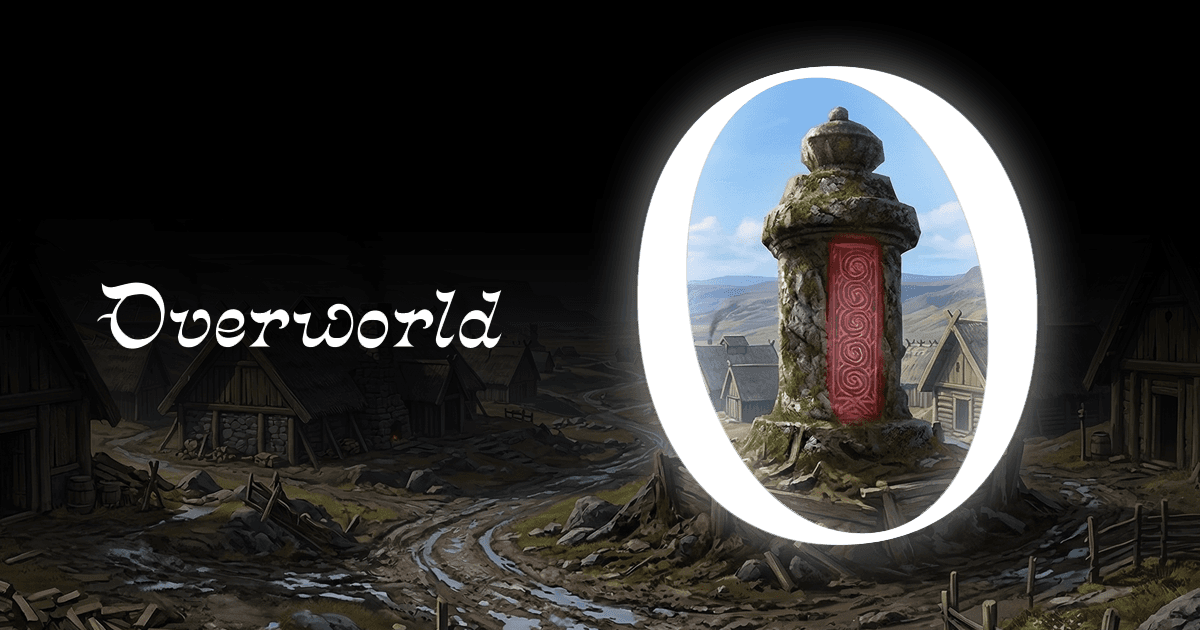
Hugging Face has introduced Waypoint-1.5, an updated interactive world-generation model that delivers higher visual fidelity than its predecessor while remaining accessible to developers running consumer-grade GPUs.
Editor's Note: This article is based on an official announcement from the source organization. Claims regarding performance, benchmarks, and capabilities have not been independently verified.
World models — systems that generate navigable, responsive environments frame-by-frame — have attracted significant research investment as potential tools for game development, autonomous-agent training, and robotics simulation. Earlier iterations, including the original Waypoint release, demonstrated the concept but were constrained by computational demands or visual quality trade-offs. Waypoint-1.5 is positioned as a step toward closing that gap.
What Waypoint-1.5 Actually Does
At its core, Waypoint-1.5 generates interactive environments that a user or agent can move through in real time, with the model rendering each new perspective as the virtual camera or character advances. This differs from static video generation: the output responds to navigational inputs rather than playing back a pre-rendered sequence. According to the Hugging Face blog post, the 1.5 update improves the visual coherence and detail of those generated scenes compared with the original model.
The emphasis on consumer GPU compatibility is notable. Many frontier generative models — particularly video and 3D-generation systems — require data-centre hardware or multi-GPU rigs to run at acceptable speeds. By targeting everyday GPUs, Waypoint-1.5 lowers the practical entry point for independent developers, small studios, and academic researchers who lack enterprise infrastructure.
By targeting everyday GPUs, Waypoint-1.5 lowers the practical entry point for independent developers, small studios, and academic researchers who lack enterprise infrastructure.
Implications for Game Development and AI Training
The most immediate practical applications sit in two areas. First, game developers and interactive-media creators could use a system like Waypoint-1.5 to prototype environments rapidly, generating explorable spaces without manually authoring every asset. Second, and perhaps more consequentially for the AI field, world models serve as simulation environments for training and evaluating autonomous agents — a use case that companies building robotics and self-driving systems have prioritised heavily.
Training reinforcement-learning agents in simulated worlds is faster and cheaper than physical testing, but the simulation gap — the difference between synthetic and real environments — remains a challenge. Higher-fidelity world models reduce that gap, potentially improving how well agents trained in simulation transfer to real-world tasks.
Open Availability and the Hugging Face Ecosystem
The release appears on the Hugging Face platform, which hosts the blog post and, by typical convention for Hugging Face model releases, likely accompanies model weights and associated code in the Hugging Face Hub. This positions Waypoint-1.5 within the broader open-weights ecosystem, where developers can download, fine-tune, and integrate models into existing pipelines without licensing fees — though the specific licence terms were not confirmed in available source material.
Integration complexity for Waypoint-1.5 will depend on how well it connects with existing frameworks. Hugging Face's ecosystem generally supports Transformers and Diffusers library compatibility, which would make adoption straightforward for developers already working within those pipelines. Pricing, beyond the cost of compute, appears to follow the open-access model standard on Hugging Face, meaning no direct usage fees for running locally.
Competitive Context: A Crowded World-Model Field
Waypoint-1.5 enters a space that has grown considerably more competitive in the past twelve months. Google DeepMind demonstrated Genie and Genie 2, world-model systems capable of generating interactive environments from single images. Decart released Oasis, a real-time Minecraft-style world model that drew wide attention in late 2024. These systems have largely been research demonstrations or limited-access releases; a consumer-GPU-compatible, openly available alternative addresses a practical gap those projects left open.
The fidelity improvement in Waypoint-1.5 matters because earlier open world models often produced environments that degraded quickly — objects flickered, geometry dissolved around the edges of the frame, and consistency across navigational steps was unreliable. If the 1.5 update meaningfully addresses those artifacts, it represents a usable tool rather than a research proof-of-concept.
What This Means
For developers building AI-driven applications, games, or agent-training pipelines, Waypoint-1.5 represents a more accessible entry point into interactive world generation — one that no longer requires specialised hardware to explore seriously.