NVIDIA and Apple have integrated CloudXR 6.0 natively into visionOS, enabling RTX-powered workstations and servers to stream high-fidelity 3D graphics and simulation environments directly to the Apple Vision Pro headset — without requiring software to run on the headset's own silicon.
Editor's Note: This article is based on an official announcement from the source organization. Claims regarding performance, benchmarks, and capabilities have not been independently verified.
Until now, Vision Pro users were largely constrained to software built for the device's local hardware. CloudXR 6.0 offloads rendering entirely to remote RTX machines, meaning computationally intensive professional applications can deliver full-fidelity output to the headset's display over a network connection.
From Workaround to Native Integration
CloudXR, NVIDIA's extended reality streaming platform, renders XR content server-side using RTX GPU architecture and transmits it to a client device. Version 6.0 introduces native visionOS support, eliminating the third-party compatibility layers that earlier streaming attempts required on Apple hardware.
Native visionOS support from NVIDIA lends the architecture a degree of official integration that third-party streaming attempts have historically lacked.
Innoactive, a Munich-based enterprise XR solutions provider, supplies the deployment layer in this pipeline. Its platform manages session handling, user authentication, and secure content delivery from corporate RTX infrastructure — whether on-premises or cloud-hosted — to individual Vision Pro units.
NVIDIA describes the connection as secure, a detail that matters to enterprise customers in sectors such as automotive, aerospace, and pharmaceutical manufacturing, where proprietary 3D models carry significant intellectual property value. Keeping rendering workloads on controlled RTX hardware rather than on end-user devices adds a layer of data governance that IT departments in those industries typically require.
Autodesk VRED as the Lead Use Case
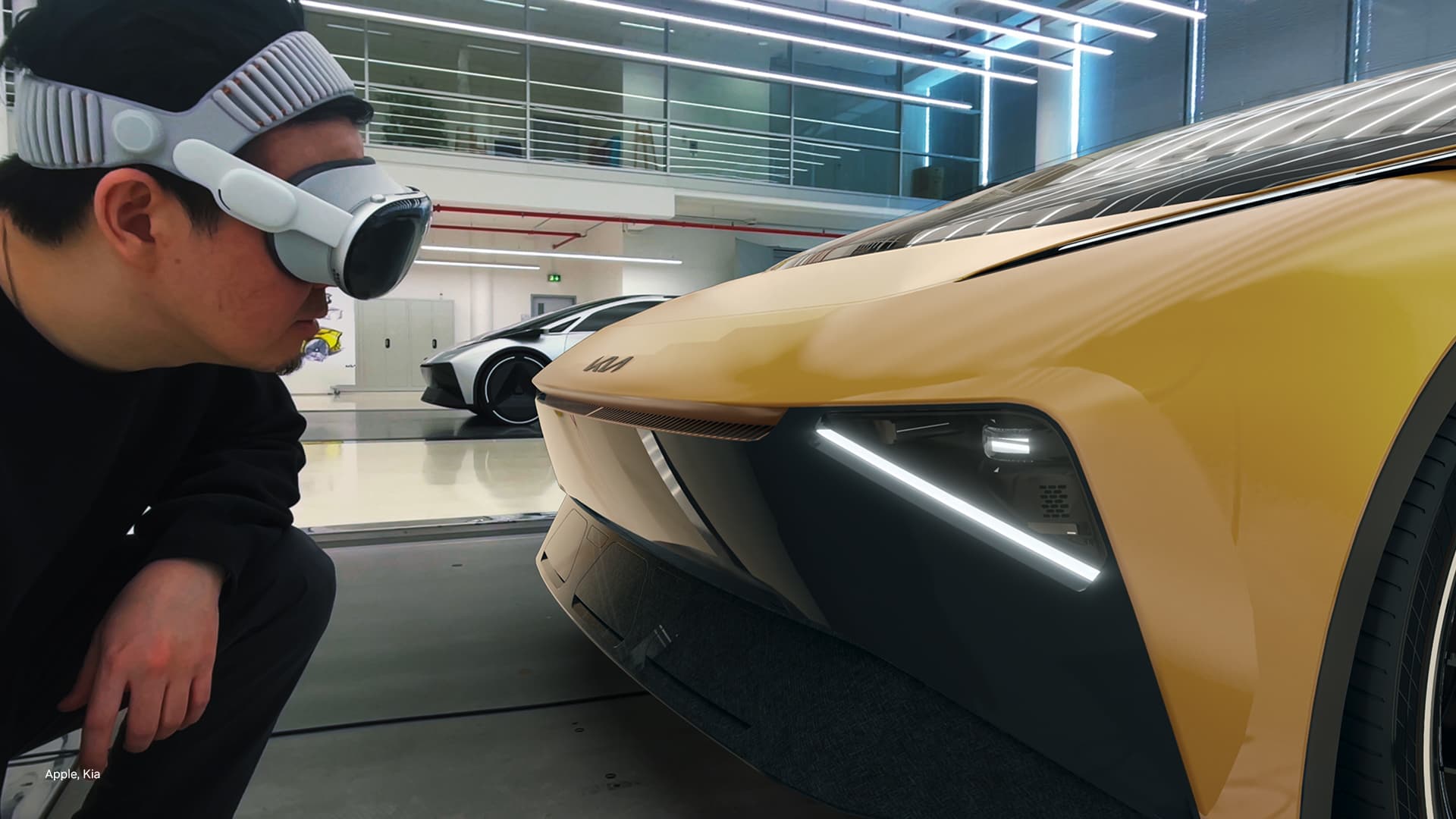
Autodesk VRED, an automotive and product design visualization tool, is the first professional application supported through this pipeline. Automotive manufacturers and tier-one suppliers use VRED to review vehicle designs in photorealistic detail before physical prototypes are built — a workflow that demands real-time raytracing of complex surface materials and lighting scenarios far beyond what a wearable headset can currently handle locally.
With CloudXR 6.0 and Innoactive's platform, a designer wearing an Apple Vision Pro interacts with a full-fidelity VRED session rendered on a remote RTX workstation. The headset's hand tracking, eye tracking, and immersive display become the front end for software that continues to execute on dedicated professional hardware elsewhere on the network.
Additional professional 3D applications beyond VRED are expected to be supported through the same pipeline, though NVIDIA has not published a confirmed list.
Why This Matters for Vision Pro's Enterprise Case
Apple launched Vision Pro in February 2024 at a starting price of $3,499, positioning it as a spatial computing device for professional and creative workflows. Enterprise interest has been real, but the library of professional-grade software available natively on visionOS has grown slowly.
The NVIDIA integration addresses that gap directly. Existing professional software ecosystems — built around Windows workstations and RTX GPUs — can now project into the Vision Pro environment without vendors rebuilding their applications for visionOS from scratch. For enterprise buyers already invested in RTX infrastructure, the barrier to deploying Vision Pro as a productive endpoint drops considerably.
For NVIDIA, the partnership extends CloudXR's reach into Apple's hardware ecosystem at a time when enterprise XR adoption is benchmarked heavily against access to familiar tools. Supporting Vision Pro also reinforces NVIDIA's positioning of RTX infrastructure as the rendering backbone for spatial computing workflows, regardless of which headset an end user wears.
NVIDIA has not announced standalone pricing or a specific release date for CloudXR 6.0 access through Innoactive's platform. Organizations looking to deploy VRED or other RTX-accelerated applications on Vision Pro are directed to Innoactive's enterprise XR channel.
What This Means
For enterprises already running RTX workstations, Apple Vision Pro just became a viable display endpoint for professional visualization software — no visionOS-native rebuild required.