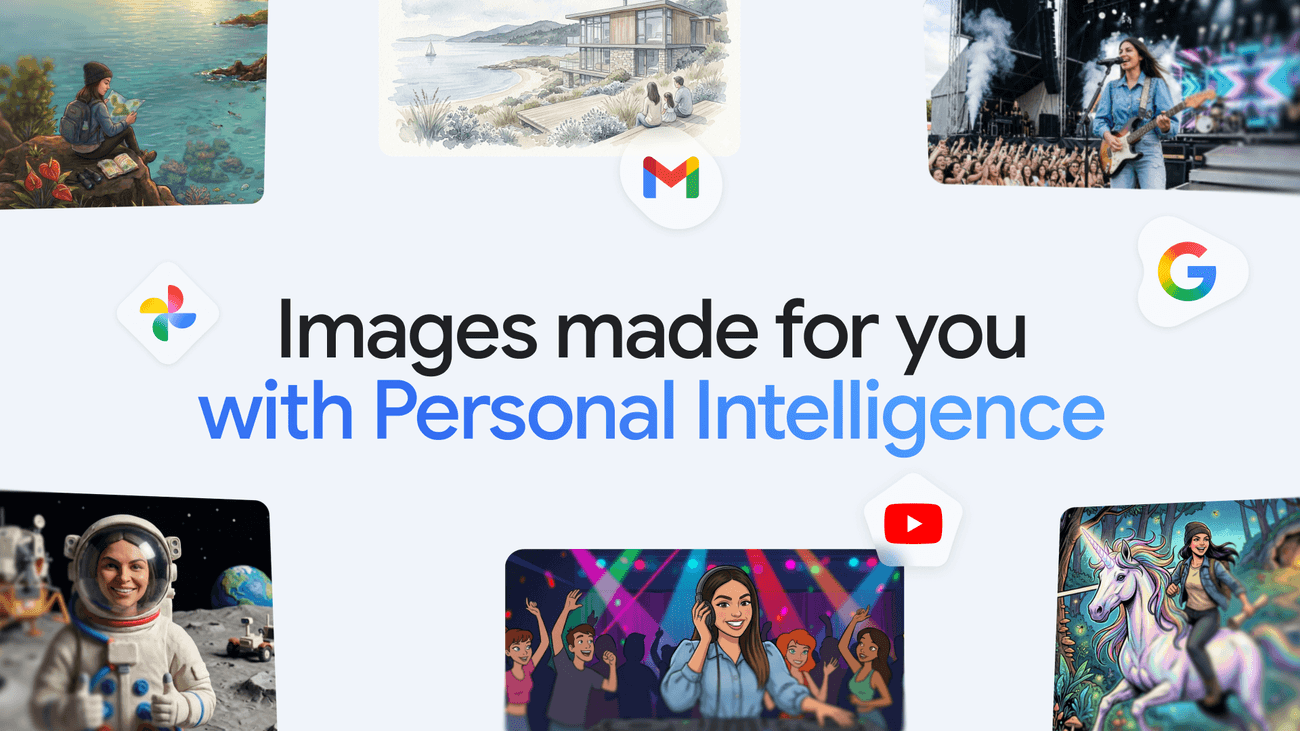
Google is expanding its Personal Intelligence feature across three products simultaneously — AI Mode in Search, the Gemini app, and Gemini in Chrome — according to a post on the Google AI Blog.
Editor's Note: This article is based on an official announcement from the source organization. Claims regarding performance, benchmarks, and capabilities have not been independently verified.
Personal Intelligence is Google's framework for delivering AI-generated responses tailored to an individual user's context, history, and preferences. The feature represents Google's effort to move its AI products beyond generic outputs toward responses that feel meaningfully relevant to each person.
Personal Intelligence is Google's clearest signal yet that the future of search is not a single answer for everyone — it's a different answer for you.
What Personal Intelligence Actually Does
At its core, Personal Intelligence allows Google's AI systems to incorporate user-specific signals — such as past searches, location, and preferences — when generating responses. Rather than returning the same result to every user asking an identical question, the system attempts to contextualize answers based on what it knows about the individual.
The expansion to AI Mode in Search means users interacting with Google's conversational search interface will receive responses informed by their personal context. This is a meaningful shift: traditional search already uses personalization for ranking, but AI Mode's conversational format allows that personalization to be expressed more explicitly in the language and framing of answers.
Three Platforms, One Strategy
Bringing Personal Intelligence to Gemini in Chrome is a notable move for developers and power users who rely on the browser extension or sidebar for day-to-day tasks. It suggests that contextual AI assistance — aware of what you've been working on or reading — will become more deeply embedded in the browsing experience itself.
The Gemini app expansion follows Google's broader push to make Gemini a persistent personal assistant rather than a standalone query tool. Adding Personal Intelligence here reinforces that positioning, giving the app a layer of continuity across sessions that generic AI chatbots typically lack.
Google has not disclosed the specific data sources or user controls governing what personal information feeds into these responses, which is a detail that privacy-conscious users and developers integrating Google's tools into workflows will want to monitor closely.
Integration and Availability Unknowns
The announcement from the Google AI Blog is notably light on specifics. No pricing changes, API access details, or regional rollout timelines were included in the published post. It is unclear whether Personal Intelligence in these contexts is available to all users globally, limited to specific markets, or gated behind Google One subscription tiers.
For developers building on top of Google's AI APIs, the absence of technical documentation around Personal Intelligence is a gap. Whether these personalization signals will eventually be accessible through the Gemini API — allowing third-party applications to benefit from the same contextual layer — remains unconfirmed.
The integration complexity for enterprise users is also an open question. Organizations using Google Workspace will likely want clarity on whether Personal Intelligence draws on work data, personal Google account data, or both — and what controls administrators have over that boundary.
What This Means
Google is making a deliberate bet that AI tools people actually use daily will win on personalization, not just capability — and this expansion puts that strategy into direct competition with Microsoft's Copilot, which is pursuing a similar context-aware approach across its own product suite.