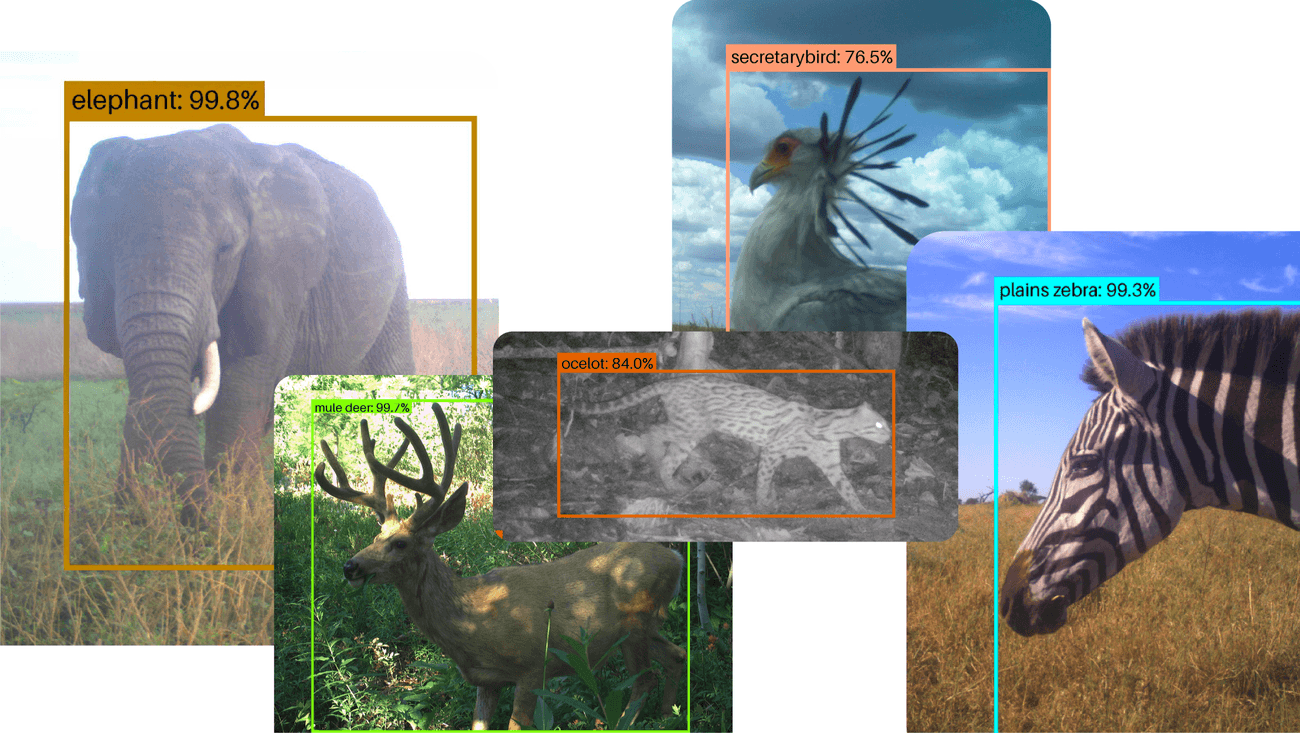
Google has released SpeciesNet, an open-source AI model purpose-built to identify animal species from camera trap images, offering wildlife conservationists an automated alternative to manually reviewing thousands of field photographs.
Editor's Note: This article is based on an official announcement from the source organization. Claims regarding performance, benchmarks, and capabilities have not been independently verified.
Camera traps — remote, motion-activated cameras placed in forests, savannas, and other habitats — are one of the primary tools researchers use to monitor animal populations without human intrusion. A single field deployment can generate hundreds of thousands of images over months, creating a data bottleneck that slows conservation decision-making. Google developed SpeciesNet to address that specific problem, according to the company's AI Blog.
From Manual Sorting to Automated Species Detection
SpeciesNet is trained to classify animal species directly from raw camera trap footage, automating a task that has traditionally required ecologists or trained volunteers to tag images one by one. The model is designed to handle the challenging visual conditions typical of field imagery — low light, partial obstructions, motion blur — that make species identification genuinely difficult even for experienced reviewers.
The model aims to dramatically reduce the manual labour involved in reviewing thousands of field photographs, allowing researchers and rangers to focus on conservation action rather than data processing.
By open-sourcing the model, Google makes SpeciesNet available to any organisation with the technical capacity to deploy it, without licensing fees or commercial agreements. This is a meaningful distinction for conservation NGOs and government wildlife agencies, which frequently operate on constrained budgets and cannot afford proprietary software at scale.
What SpeciesNet Offers Developers and Field Teams
From a developer perspective, SpeciesNet's open-source availability means teams can integrate it into existing data pipelines, customise it for regional species sets, or fine-tune it on locally collected imagery. Conservation technology platforms that already aggregate camera trap data — such as Wildlife Insights, which Google has previously supported — can incorporate the model directly rather than building classification capability from scratch.
The practical workflow impact is significant. A ranger network monitoring a large protected area might deploy dozens of camera traps simultaneously, generating a volume of images no small team could manually process in a timely fashion. Automated species identification allows that data to feed into population dashboards and threat-detection systems in near real time, improving the speed at which anti-poaching or habitat management decisions can be made.
Pricing is straightforward: the model is free to use under its open-source license, according to Google. Integration complexity will depend on an organisation's existing infrastructure, but the open-source format removes the commercial and legal friction that often slows adoption in the non-profit sector.
The Broader Conservation Technology Landscape
SpeciesNet enters a field where AI-assisted wildlife monitoring has been gaining traction for several years. Tools like Microsoft Azure's AI for Earth programme and academic projects such as MegaDetector have demonstrated that machine learning can meaningfully accelerate image review workflows. Google's contribution adds a species-classification layer — going beyond simply detecting whether an animal is present in a frame to identifying which species it is.
This distinction matters operationally. Knowing that a camera trap triggered on a leopard rather than a domestic dog, or on an endangered species rather than a common one, determines how a conservation team responds. Species-level identification is where the conservation value concentrates, and it is also where the technical challenge is highest, given the visual similarity between related species in field conditions.
Google has not publicly disclosed the full list of species the model is trained to identify, the geographic scope of its training data, or specific accuracy benchmarks across different habitat types, according to information available from the company's blog post. Those details would be material for organisations evaluating whether SpeciesNet is suitable for their specific regional context before committing to integration.
Deployment Considerations for Conservation Organisations
Organisations considering SpeciesNet should evaluate a few practical factors. First, training data geography matters: a model trained predominantly on East African savanna species may underperform in Southeast Asian rainforest environments where species distributions and camera trap image characteristics differ substantially. The ability to fine-tune the open-source model on local data is a meaningful advantage here.
Second, compute infrastructure is a real consideration for field-based organisations. Running inference on large image datasets requires either local GPU capacity or cloud compute costs, both of which represent resource commitments that smaller NGOs must plan for carefully.
Third, integration with existing data management systems — whether that is a custom-built database or a platform like Wildlife Insights or SMART (Spatial Monitoring and Reporting Tool) — will determine how quickly an organisation can move from model deployment to actionable insight.
What This Means
For conservation technologists and wildlife organisations, SpeciesNet provides a freely available, customisable baseline for automated species identification that can meaningfully reduce the time between data collection and conservation action — provided teams have the infrastructure to deploy it and validate its accuracy against local species populations.