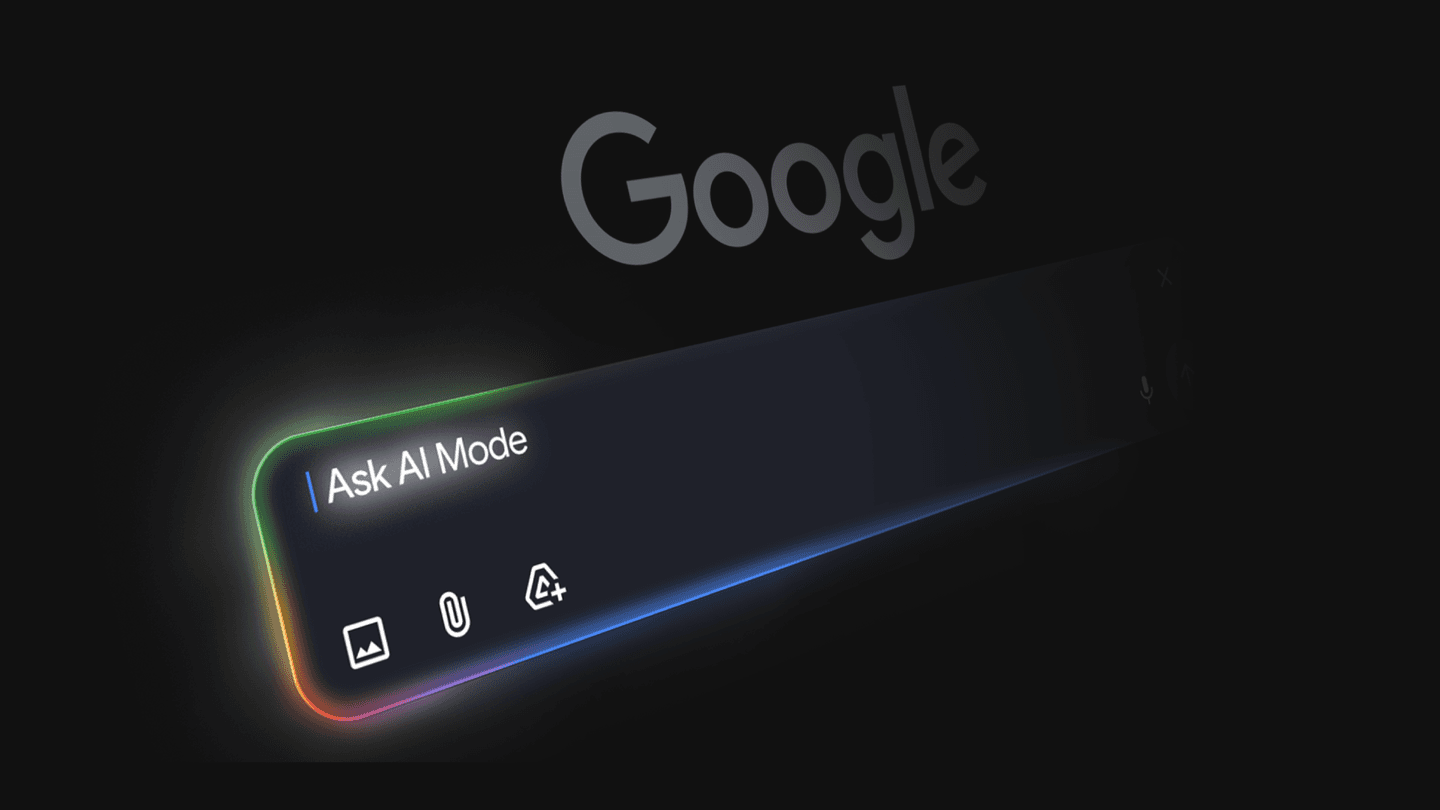
Google has made Canvas available to all U.S. users inside AI Mode in Search, adding document drafting and interactive tool-building directly into the search experience.
Editor's Note: This article is based on an official announcement from the source organization. Claims regarding performance, benchmarks, and capabilities have not been independently verified.
The launch extends AI Mode beyond question-answering into active creation. Previously, Google's AI Mode focused on synthesizing information and responding to complex queries. Canvas adds a persistent workspace layer, allowing users to generate, edit, and refine longer-form content — from written documents to functional interactive tools like quizzes or calculators — without switching to a separate application.
From Search Bar to Creation Layer
Canvas in AI Mode represents Google's clearest move yet toward embedding generative productivity directly into its flagship product. According to Google, users can now prompt AI Mode to produce a draft document or build a simple interactive application, then continue iterating on it within the same interface. The company says the feature is available now to all users in the United States.
The timing is deliberate. Google faces sustained competitive pressure from AI-native tools — including OpenAI's ChatGPT, which introduced its own Canvas feature in late 2024 for document and code editing, and Microsoft's Copilot, embedded across its productivity suite. Bringing similar functionality into Search means Google can intercept creative and drafting tasks before users migrate to rival platforms.
Canvas transforms Search from a place you visit to get answers into a surface where you complete work — a meaningful redefinition of what Search is for.
What Canvas Can Build
According to Google, the tool supports two primary use cases. First, document drafting: users can generate essays, reports, emails, or structured written content and edit them inside the Canvas workspace. Second, interactive tool creation: users can prompt AI Mode to build functional mini-applications — a quiz on a topic they're researching, a cost calculator, or a simple planning template — rendered directly in Search.
The interactive tool capability is the more technically notable addition. It implies that Canvas can output and render code — likely HTML, CSS, and JavaScript — within a sandboxed environment inside Search. This puts it in closer competition with tools like Claude's Artifacts feature from Anthropic, which similarly renders live interactive outputs alongside conversational responses.
Google has not published detailed technical documentation on the sandboxing approach or the underlying model powering Canvas in AI Mode, though AI Mode broadly runs on Gemini.
Integration Without Friction — For Now
For everyday users, the practical appeal is consolidation. Research, drafting, and basic tool-building become a single-session workflow rather than a multi-tab process. A user researching a topic can move from reading synthesized results to drafting a report based on those results within the same interface.
For professionals and developers, the current implementation appears limited to lightweight outputs rather than production-grade code or complex documents. Google has not announced API access to Canvas functionality, nor has it detailed export options beyond what's visible in the consumer interface. Integration with Google Workspace — Docs, Sheets, Slides — would be a logical next step, though the company has not confirmed this.
Pricing follows AI Mode's existing structure: the feature is available at no additional cost to U.S. users accessing Search, though AI Mode itself has been rolling out as part of Google One AI Premium and select Search Labs access tiers. Google has not clarified whether Canvas will remain free at scale or become a premium feature.
Competitive Context: Everyone Is Building a Canvas
The naming overlap with OpenAI's Canvas is unlikely to be coincidental — both companies are converging on the same interaction paradigm. The pattern across the industry is consistent: conversational AI alone is no longer the differentiator. The new battleground is whether users stay inside a platform to do work, not just ask questions.
Google's structural advantage is distribution. Search handles billions of queries daily. Embedding a creation layer into that surface gives Canvas in AI Mode an adoption runway that standalone AI tools cannot match through organic growth alone. The question is whether the output quality and workflow flexibility are sufficient to change user behavior — specifically, whether someone who currently opens a Google Doc or spins up a CodePen will instead stay in Search.
Early indications suggest Google is treating this as infrastructure rather than a feature: a foundational shift in what the Search interface is designed to do.
What This Means
For anyone who uses Search as a starting point for writing or research, Canvas in AI Mode removes the step of moving to a separate tool — making Google Search a direct competitor to lightweight document editors and no-code app builders.