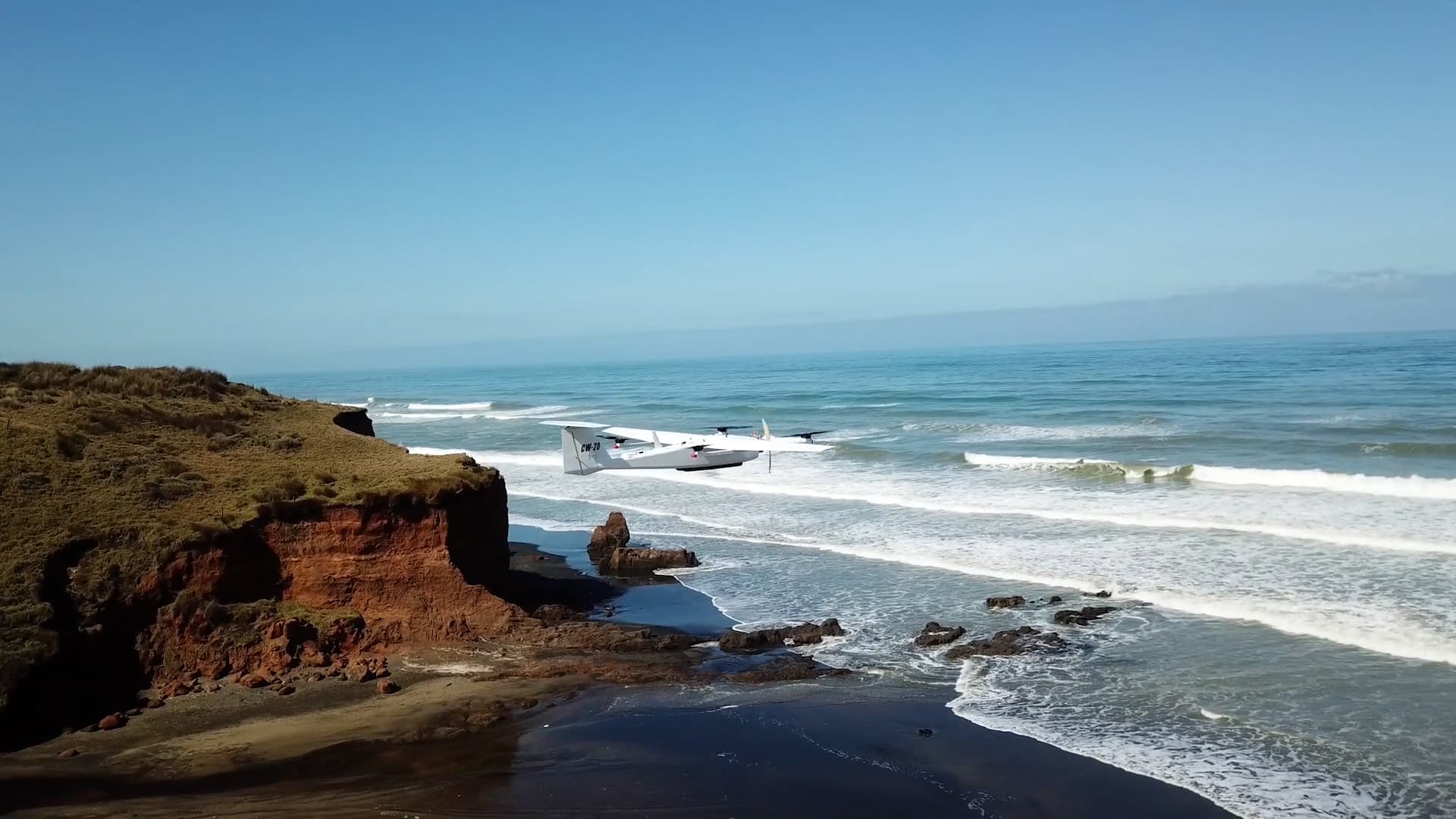
Fewer than 54 adult Māui dolphins are estimated to survive in the wild, making them the most endangered marine dolphin on Earth — and researchers in New Zealand are now deploying AI-equipped drones to monitor them before the window for intervention closes.
Editor's Note: This article is based on an official announcement from the source organization. Claims regarding performance, benchmarks, and capabilities have not been independently verified.
The project, featured on the Microsoft AI Blog, combines autonomous drone surveillance with computer vision models capable of identifying individual dolphins from aerial imagery. What once required hours of painstaking manual review by specialist scientists can now be processed in a fraction of the time, according to the research team involved.
Why Māui Dolphins Are Running Out of Time
Māui dolphins (Cephalorhynchus hectori maui) live exclusively along a narrow stretch of New Zealand's North Island west coast. Their population has collapsed over decades, driven primarily by entanglement in set nets and trawl fishing gear. Current protections restrict some fishing activity in parts of their habitat, but conservationists argue the measures do not go far enough — and that reliable, up-to-date population data has long been a missing piece in that policy debate.
Traditional survey methods are expensive, slow, and logistically difficult in the remote coastal zones these dolphins inhabit. Boat-based surveys can disturb animals, and the dolphins' small size and low dorsal fin make them harder to spot and photograph than larger species.
The technology aims to generate population data fast enough to actually inform conservation policy before the species disappears.
How the AI System Works
The drone platform captures high-resolution aerial footage during survey flights over known dolphin habitat. An AI model — trained on images of Māui and their close relatives, Hector's dolphins — analyzes the footage to detect, classify, and individually identify animals based on natural markings such as dorsal fin shape and body pigmentation patterns.
This photo-identification technique, known as mark-recapture, has long been used in marine mammal research. The AI layer accelerates it dramatically. According to the project team, automated processing reduces analyst workload significantly, allowing surveys to be conducted more frequently and results to be turned around quickly enough to be operationally useful.
The system runs on Microsoft Azure cloud infrastructure, which handles the computational load of processing large volumes of aerial imagery — a task that would overwhelm standard research computing setups.
The Human Stakes Behind the Data
For the iwi (Māori tribes) and coastal communities of the North Island's west coast, the Māui dolphin is not simply a conservation statistic. The species holds cultural significance, and its potential extinction would represent a permanent loss for communities whose identity is intertwined with the marine environment they inhabit.
Researchers working on the project have emphasized that faster, more granular data changes the nature of conservation advocacy. When population counts and distribution maps can be updated annually rather than every several years, scientists can present regulators with current evidence rather than historical trends — a meaningful shift in how urgency is communicated and acted upon.
The broader pattern here is significant. Marine mammal monitoring has historically been constrained by cost and access. A pod of dolphins seen once during a boat survey may not be seen again for months. Drone-based AI systems can revisit the same area repeatedly at low marginal cost, building longitudinal datasets that were previously impractical to assemble.
Scaling a Model That Could Apply Elsewhere
New Zealand's Department of Conservation has been involved in Māui dolphin protection efforts for years, but the integration of AI-driven aerial monitoring represents a methodological step forward. If the approach proves reliable at the population scale needed for regulatory use, it could serve as a template for monitoring other critically endangered cetaceans — including the vaquita porpoise in the Gulf of California, whose population is similarly in the low double digits.
The project also illustrates a broader trend: conservation organizations increasingly partnering with technology companies to apply tools developed in commercial contexts — computer vision, cloud computing, drone hardware — to ecological problems where funding and technical capacity have traditionally been limiting factors. Microsoft's involvement fits within its broader AI for Good initiative, which funds and promotes applications of AI to social and environmental challenges.
Critics of such partnerships sometimes raise questions about the role of large technology firms in shaping conservation priorities. But researchers involved in this project argue that the tools themselves are neutral — what matters is whether the data they generate translates into policy change quickly enough to matter.
What This Means
For Māui dolphins, AI-assisted monitoring will not, on its own, prevent extinction — but it removes a long-standing barrier to evidence-based action, giving conservationists and policymakers the current, granular data they need to make the case for stronger protections while there is still time.


